

A FBP-Inspired language for building universal applications.
Hlang aims to make programming easier, faster and more comfortable. It avoids coding, repetition and frustration.
Source · npm · Website · Documentation · 简体中文 · Brand
hlang is an open-source flow-based programming language for TypeScript and JavaScript. A program is a graph of Readable, Transform, and Writable nodes. Nodes exchange data through named ports, and every port is an RxJS stream, so connections stay live while data flows.
A graph can be written in code, stored as JSON (IGraph), run in process by the interpreter, compiled ahead of time to an ES module, or built in a visual editor. The engine does not depend on any editor.
| Package | Purpose |
|---|---|
@hlang-org/runtime |
Nodes, ports, and flows on RxJS |
@hlang-org/ir |
IGraph types and planGraph, the front end shared by both backends |
@hlang-org/interpreter |
Run an IGraph in process, in Node.js or a browser |
@hlang-org/compiler |
Compile an IGraph to a standalone ES module |
@hlang-org/editor-core · editor-react · editor-ui |
Lumen, the node editor stack (0.x, in development) |
Every package is also published under the @hlang-tech scope with identical builds.
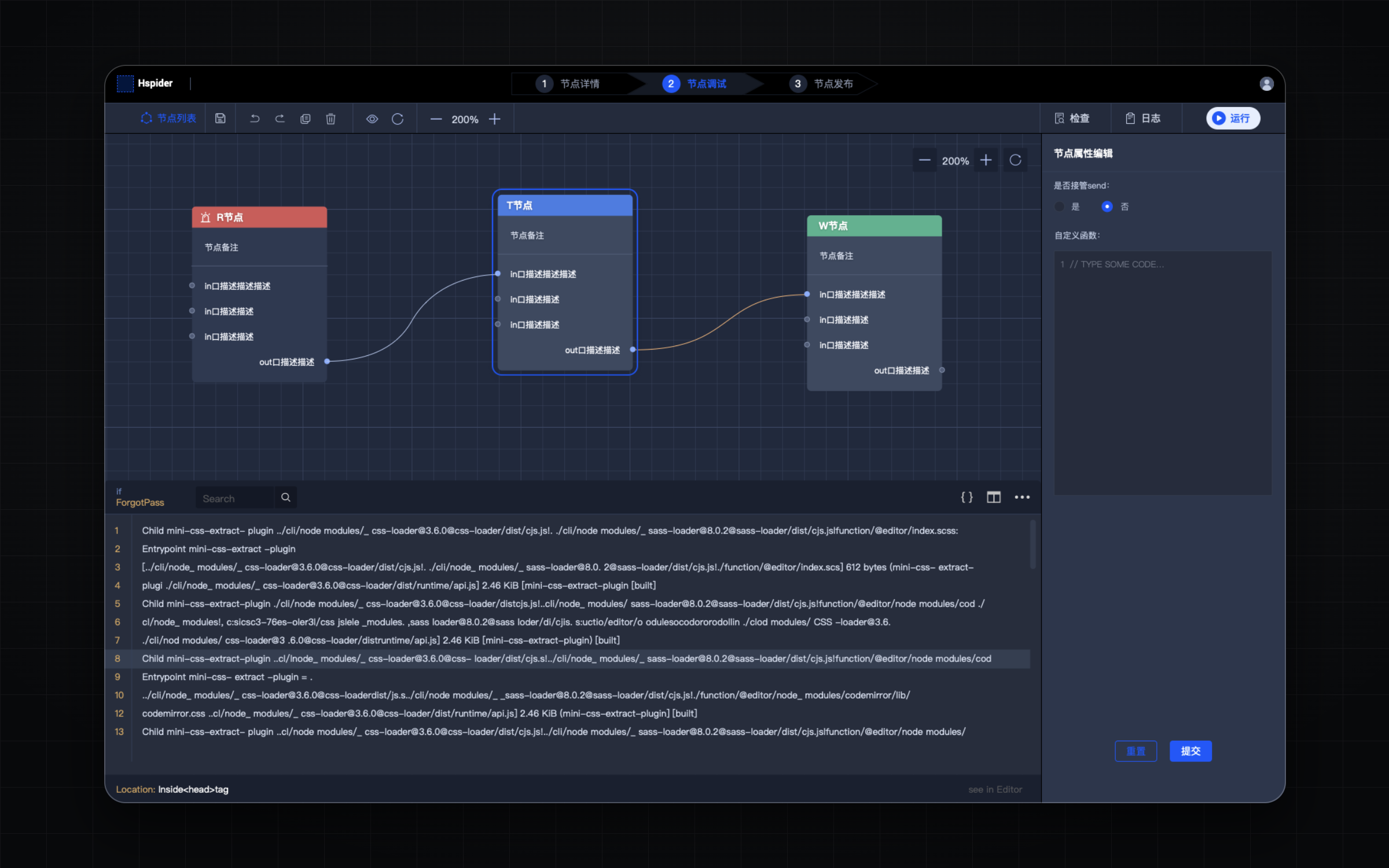
Retail store operations |
AStack |
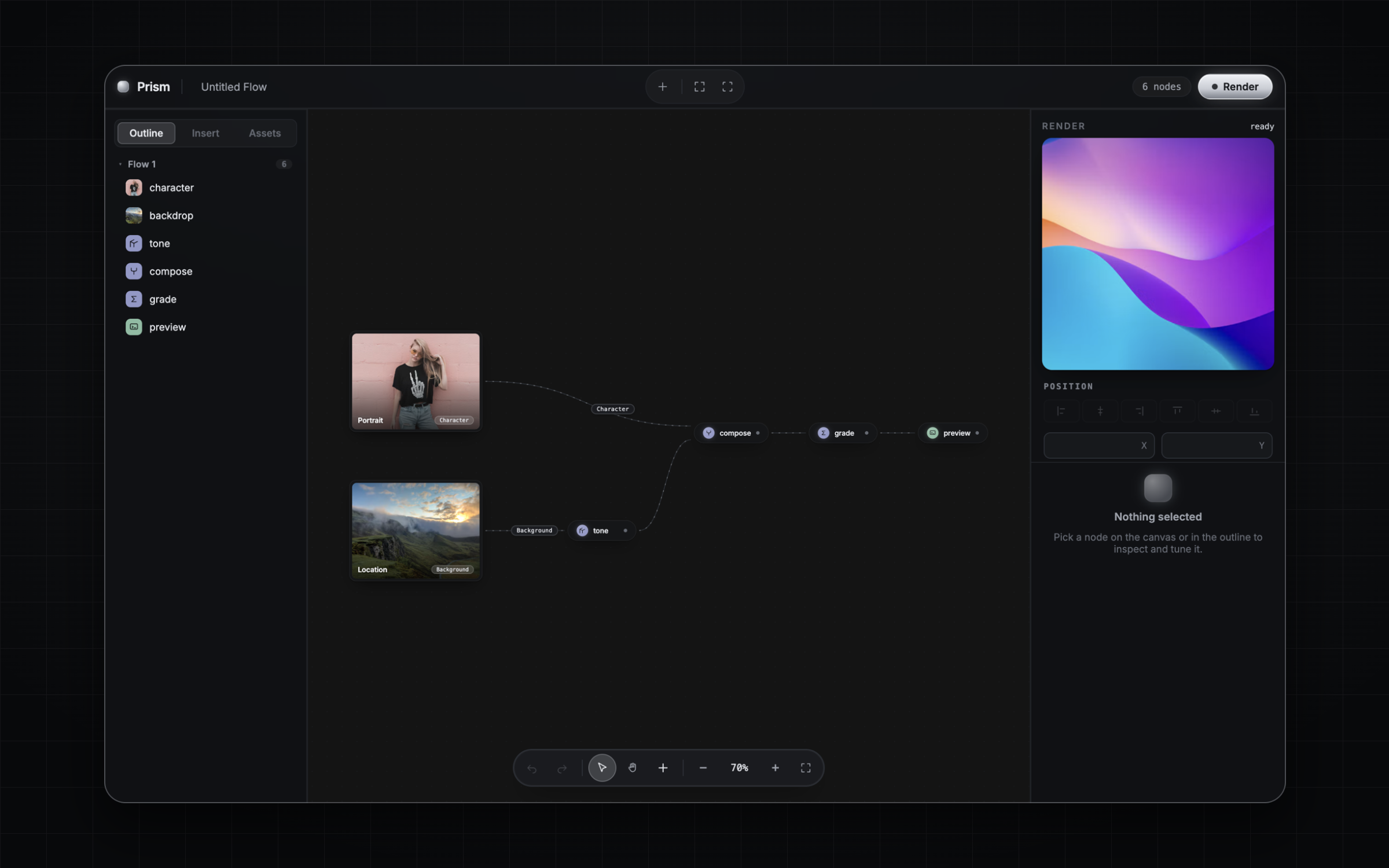
Prism |
npm install @hlang-org/runtime @hlang-org/interpreterFollow the quick start to write a graph in code, run it as data, and compile it.
hlang is MIT licensed. Read the contribution guide and open pull requests against develop. Report security problems privately through security advisories.