


sow is an open-source RPM / DEB repository manager from Pigsty. One self-contained binary turns a directory of packages into a working YUM / APT repository, and manages curated repositories with signing, snapshots, audit history, and incremental publication when you need more control.
"Software Object Warehouse": store once, serve everywhere, ship only what changed.
Website | Docs | Get Started | Download | Release Notes | Discuss | Pigsty | 中文
sow ships in the Pigsty infra repository for mainstream Linux distros on amd64 / arm64:
# APT: Debian / Ubuntu and compatible platforms
sudo tee /etc/apt/sources.list.d/pigsty-infra.list > /dev/null <<'EOF'
deb [trusted=yes] https://repo.pigsty.io/apt/infra generic main
EOF
sudo apt update && sudo apt install -y sow
# YUM: RHEL / Rocky / Alma / Anolis and compatible platforms
sudo tee /etc/yum.repos.d/pigsty-infra.repo > /dev/null <<'EOF'
[pigsty-infra]
name=Pigsty Infra for $basearch
baseurl=https://repo.pigsty.io/yum/infra/$basearch
enabled=1
gpgcheck=0
module_hotfixes=1
EOF
sudo dnf makecache && sudo dnf install -y sowFor mainland China users: consider replacing
repo.pigsty.iowithrepo.pigsty.cc.
Pinned RPM / DEB packages, installer-free tarballs for Linux and macOS, and source builds are covered on the download page and published on GitHub Releases.
Then point sow at a directory of packages:
sow create ./packages                       # emit YUM / APT repository metadata in place
sow create ./packages --sign-with <KEYID>   # also sign currently unsigned RPMs with a GPG key
That directory is now a repository. RPMs become a normal YUM/DNF repository, DEBs become a
flat APT repository, and a mixed directory gets both. Serve it with any static web server;
--pigsty enables the Pigsty layout conventions, and sow help create documents the
complete option contract. Continue with the Quick Start.
For a password-protected signing key, SOW 0.7.0 and later accept
--passfile /run/secrets/gpg-password. You can also set SOW_GPG_PASSFILE
to that path or configure passfile next to a managed signing
key. Priority is CLI, per-key config (including legacy passphrase), then environment.
Use one nonempty UTF-8 line: one final LF or CRLF is removed, with no trimming of spaces
or tabs. Keep the file outside the repository, normally mode 0600. No default file
is searched. For create, --sign-with still selects and enables signing.
Signing and recovery commands share this interface; check sow help COMMAND in
your installed binary and see
password files for the full contract.
Plain sow create treats repository metadata as a deterministic result of the directory:
change the inputs and run it again. RPM publication installs and syncs new hash-named
indexes before replacing repomd.xml. It retains indexes referenced by the current and
immediately previous distinct repomd.xml; unchanged runs preserve that window. After a
successful pointer switch, or a rerun that completes interrupted cleanup, it removes
older SOW hash-named indexes. Other files, including an external repomd.xml.asc, stay
untouched and external signatures must be refreshed separately. An existing repomd.xml
that lists metadata SOW does not generate, such as comps groups, updateinfo, or modules,
is replaced without it; create reports those data types as a warning and in the JSON
dropped_metadata field. prune rejects such an index instead.
The bounded .sow-plain-rpm-history.json file records at most three reference sets so a
rerun can identify the predecessor on either side of an interrupted pointer switch.
It is a retention list, not a publication journal. Missing or corrupt history resets the
window: a changed pointer retains its readable predecessor; an unchanged pointer can
only retain its current indexes. Malformed old repomd.xml and corrupt historical indexes
do not prevent rebuilding, but their old reader closure cannot be restored. Symlinks at
SOW-owned metadata paths are rejected. Rebuilding with only DEB inputs, or an empty
--pigsty result, removes SOW RPM metadata and the retention list. Package removal
rules, including --pigsty, are unchanged.
To remove old versions from a flat RPM repository, use sow prune:
sow prune ./packages --dry-run            # preview superseded RPMs
sow prune ./packages                      # rebuild the index, then delete old RPMs
sow prune ./packages --protect age_18 --protect age_18-llvmjit
Prune keeps the highest Epoch/Version/Release per package name and architecture.
--protect keeps every version of an exact package name and must match a package.
It binds replacement RPM digests and indexed bytes to a stable file identity,
checks that identity before each deletion and completion, refreshes an existing
repo_complete marker, and can be rerun after an
interruption. It operates on top-level regular binary RPMs in a local
publication source; managed workspaces, mixed RPM/DEB directories, equal-version
files, RPM v6 packages, repositories with repomd.xml.asc, and a repomd.xml
that lists metadata SOW does not generate (such as comps groups) are rejected.
--metadata-timestamp works as for create. --dry-run changes no files.
Publishing the result and accommodating clients with cached old indexes remain
part of the publication workflow.
- Flat repositories:
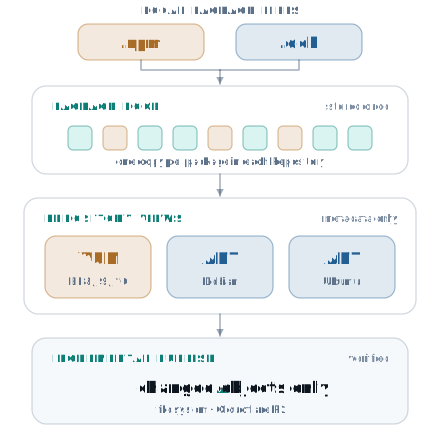
sow createreplacescreaterepo_c,dpkg-scanpackages, andreprepro. One command indexes RPM and DEB packages in place, with optional GPG signing. - One pool, many views: a managed Repository stores each package body once and projects metadata-only Dists for EL, Debian, and Ubuntu, so neither disk nor object storage holds duplicate payloads.
- Explicit state: Desired membership is separate from Built state, every build publishes
an immutable Generation, and
sow check/status/changes/logkeep validation and history inspectable. - Incremental publication:
sow changesreports the exact delta andsow publishuploads only that, to filesystem or Cloudflare R2 (S3-compatible) targets, with atomic pointer switches and fail-closed recovery. - Self-contained: one static Go binary (
CGO_ENABLED=0). No daemon, no database service, no language runtime. Linux and macOS,amd64andarm64.
A managed workspace is for repositories that SOW should own over time, with explicit membership, policy, signed metadata, immutable snapshots, audit history, and publication targets:
sow init ./lab
sow repo new local --workdir ./lab
sow dist new stable --format rpm --workdir ./lab --repo local
sow add ./packages/example.rpm --workdir ./lab --repo local --dist stable
sow check --workdir ./lab --repo local
sow status --workdir ./lab --repo local
sow changes --workdir ./lab --repo local
sow log --workdir ./lab --repo local
sow add and sow rm converge the selected Dist to a new Built Generation by default.
Configure a filesystem or r2 target in sow.yml, then sow publish TARGET uploads the
change set and sow gc collects unreachable local payloads. sow help COMMAND is the
authoritative CLI reference shipped with the binary; machine consumers can rely on the
closed --json envelopes and the documented exit-code contract.
Upgrading a workspace created by SOW v0.3 or v0.4? Stop writers, back up the workspace,
and run sow repo migrate REPOSITORY --workdir DIR once per Repository. Versions 0.5.0 through 0.7.1 use
schema v13 to index pool-path ownership without scanning unrelated publication history;
configuration and public layout stay unchanged. Then run sow build and sow check:
the updated RPM authentication and APT metadata contracts require one rebuild of affected
Dists. Later unchanged RPMs reuse matching Built evidence instead of repeated payload
verification. Do not reopen the migrated database with an older binary.
Upgrading from v0.5.0 through v0.7.0 to v0.7.1 requires no schema migration or public-layout change.
If a Repository migrated by v0.5 or v0.6 reports an invalid transition control target
after a later build, upgrade to v0.7.0 or newer; no manual repair is needed.
A configuration using passfile cannot be loaded by v0.6.1 or older; remove those
keys before downgrading.
Publication ordering, recovery, target rebinding, the one-copy boundary,
and RPM leaf export are specified in Commands and
Design Records.
Building from source requires Go 1.27.4 or newer; repository signing additionally requires a usable GPG installation and key.
make build          # write the binary to bin/sow
make test-core      # focused repository-manager tests
make test           # all Go packages plus the patched RPM module
make check          # format, module, vet, staticcheck, deadcode, focused tests
make release-local  # GoReleaser snapshot archives and packages under dist/
GitHub Actions runs regular checks in CI and Docker-backed client / S3 coverage in
Integration. Pushing an exact semantic-version tag creates a draft GitHub release after
the tag is validated against main, the source version, and the changelog; publishing that
draft is a separate manual decision. Maintainers can also run a read-only check against
hosted Cloudflare R2 with make test-r2-live (see the SOW_REAL_R2_* variables in
internal/r2/cloudflare_integration_test.go).
Before tagging, require successful CI and Integration runs for the exact
release commit. Inspect the draft archives and packages, their checksums and
sow version output before publishing the Release. Enable the website's pinned
download links only after that Release is public and its assets are available.
The authoritative user documentation lives in SOW Docs; dated architecture decisions live in Design Records. Historical implementation and verification material remains attached to versioned source tags rather than a second documentation tree in this repository.
SOW is built by the Pigsty team (pgsty), alongside:
- pigsty — open-source PostgreSQL distribution with HA, PITR, IaC, monitoring, and hundreds of extensions
- pig — PostgreSQL and extension package manager for EL / Debian / Ubuntu
- silo — S3-compatible object storage, a community-maintained MinIO fork
SOW is licensed under the Apache License, Version 2.0. Bundled third-party components remain under their respective licenses.